M returned to her home to find a rock the size of a mango on the floor. Looking up, she saw the corresponding hole in her roof where the rock had entered, ejected from Volcán Pacaya in its latest eruption. Just two kilometers separate her home from the volcano, plenty close enough to put her in the danger zone. Thankfully, she and her family had evacuated days before as CONRED - the Guatemalan government’s disaster mitigation agency - had ordered an evacuation of the area following increased volcanic activity in March 2014 (BBC,2014). Early warning systems and government agencies like CONRED have significantly reduced mortality from natural disasters over the past several decades, a trend we can hope to continue even as disasters themselves may get less predictable in a changing climate.
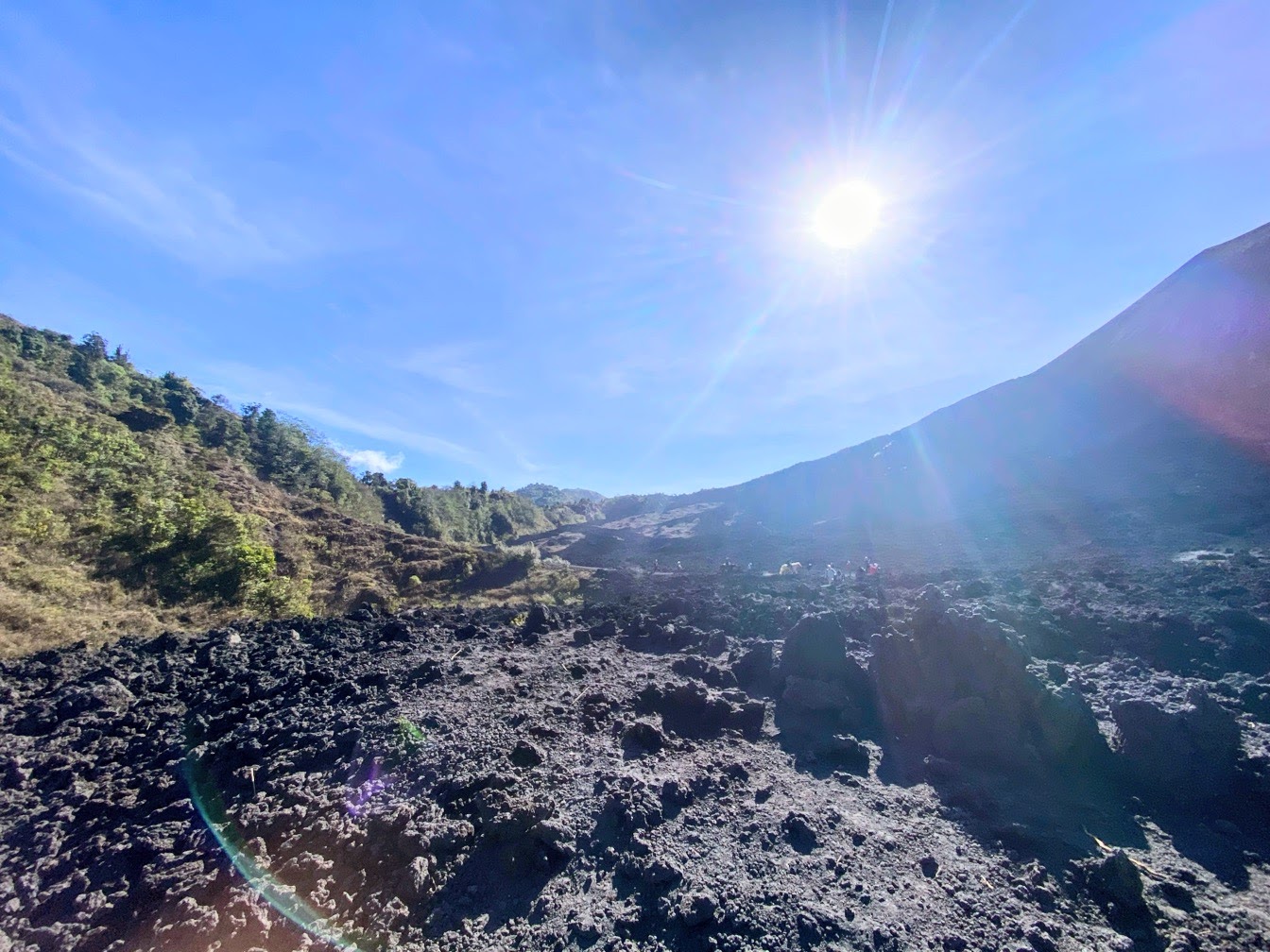
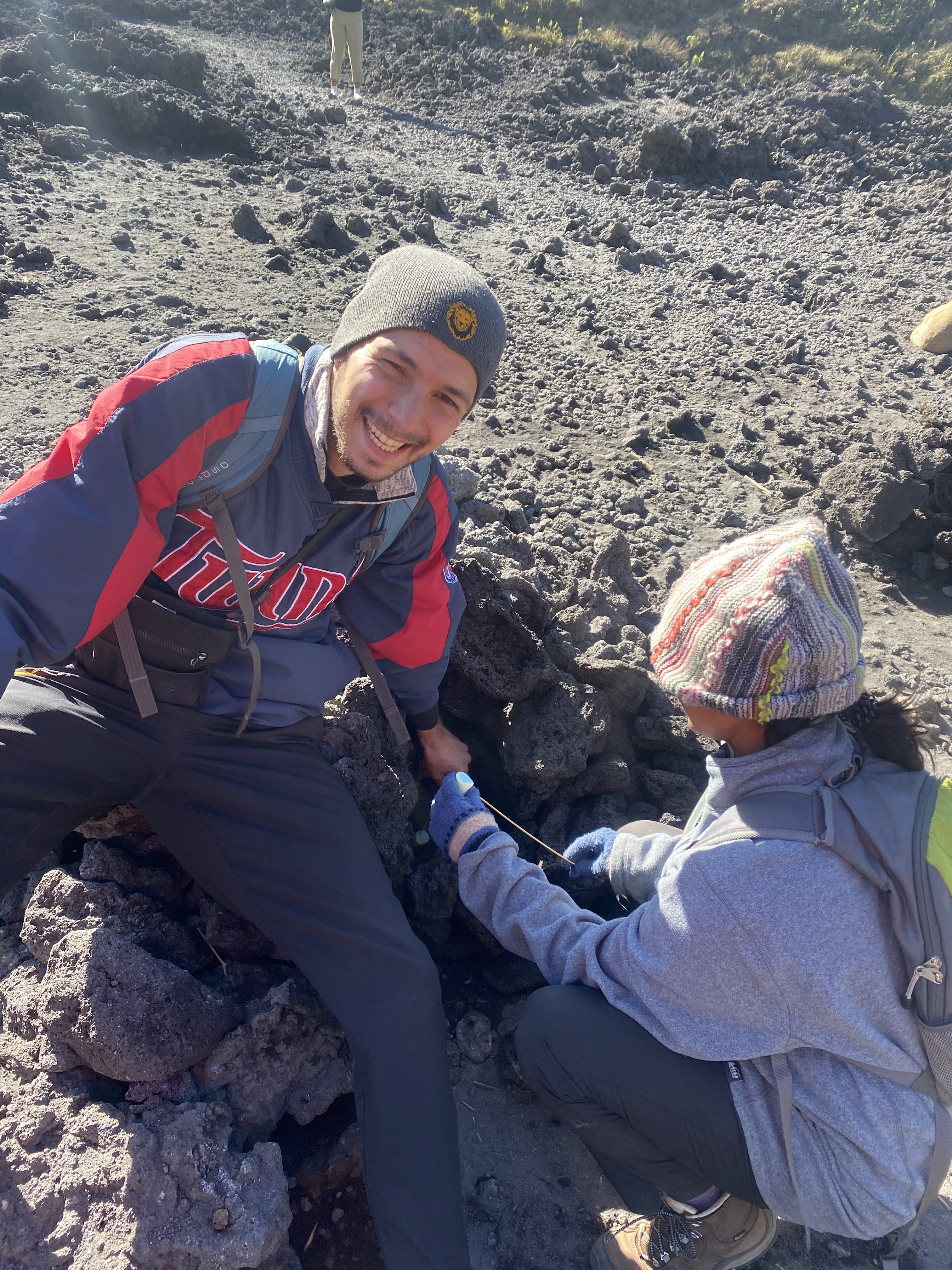
Over a decade later, M relayed this story to us as she guided our group of three on a hike of Pacaya, which has been largely quiet since its last period of increased activity in 2021 (Smithsonian, 2021). Still, the heat escaping from the fumaroles that dot the landscape is enough to “roast” marshmallows, a gambit that draws in thousands of tourists a year. (As a self-proclaimed marshmallow roasting expert, it’s really only an uninspiring melted marshmallow, although the uniqueness of the landscape makes up for the poorness of the resulting s’more.) M told us that the results are better at times of higher activity and, if it’s hot enough, a local business makes good money making and selling “Volcano pizzas.” As scientists interested in the intersection between natural and man-made systems, we appreciated our guide as she listened to our questions asked in broken Spanish and relayed her experience living so close to a source of potential disaster, a source that, uncoincidentally, is also responsible for her income.

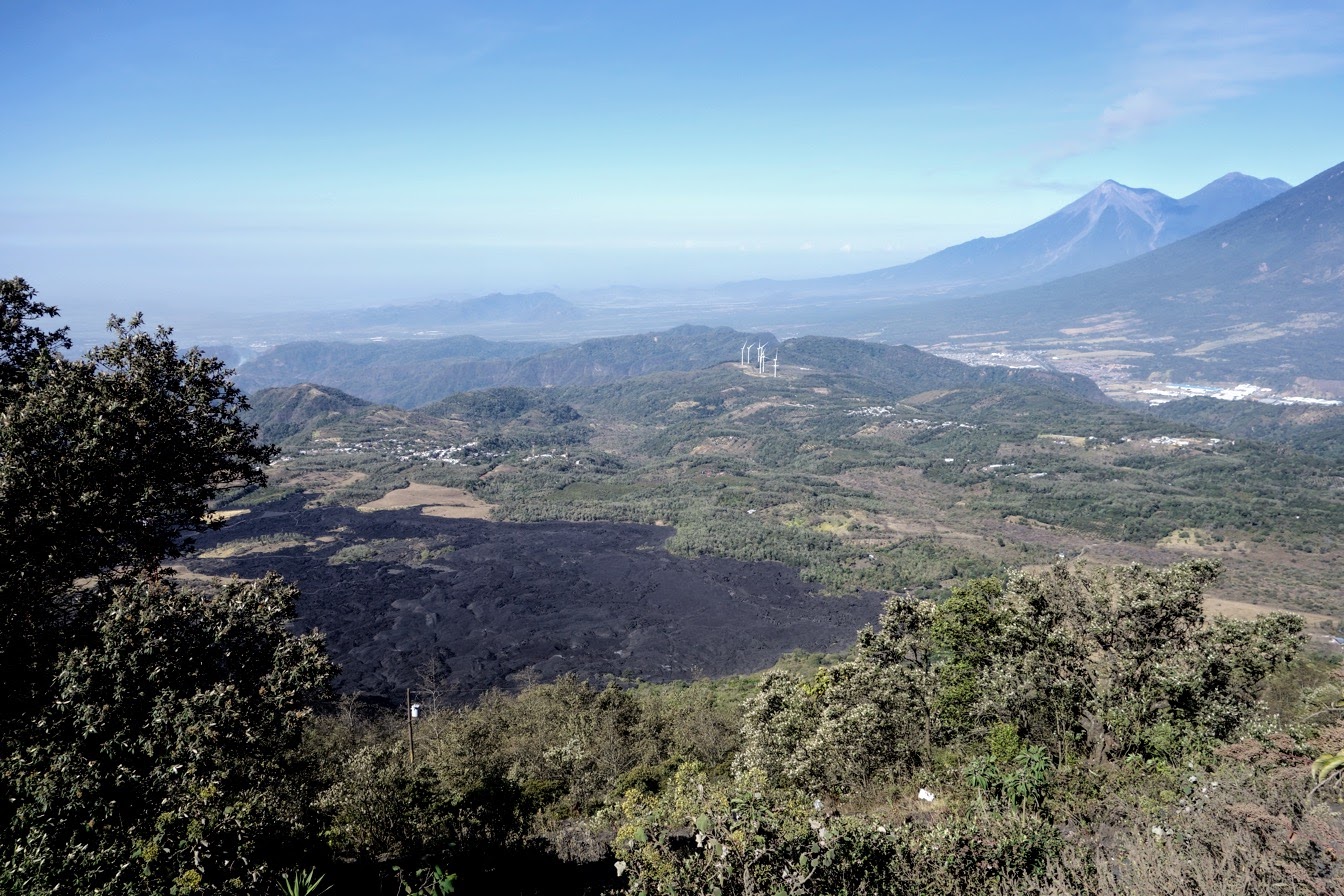
Thanks in part to the evacuation warnings - generated as the volcanic activity increased - no one died as a direct result of the pyroclastic flow. It helped too, that Pacaya has regular enough eruptions (including three major ones this century: 2010, 2014, and 2021) that folks have built their homes away from the direction where the ejected magma generally spills. Still, each eruption brings significant economic hardship, from the damages caused to property and livestock to a reduction in tourism as authorities wait to ensure the area is safe to return to. The eruption in 2014 even grounded flights in Guatemala City - 30 miles away - due to the significant amount of ash that reached the area (Wired, 2014).
Even more pernicious, the health effects from the residual gases of the eruptions caused respiratory illness and even death among some of the residents, according to M. Individually, this is challenging to prove definitively, both due to difficulty pinpointing cause and effect in a system as complex as the human body and because studying such events requires a dedicated and long-lasting research effort. Still, M is probably spot on, as nearly every disaster has long-lasting impacts that generally harm those who are most vulnerable (United Nations, 2021), probably the most universal truth in all of these events.
Volcanoes, of course, are far from the only systems that Mother Nature throws at us that pose a danger to human lives and infrastructure. From hurricanes to landslides, flooding to wildfires, heatwaves to earthquakes, we live on a dynamic planet that constantly disrupts even the best-planned systems that we may put in place. As each system has different causal relationships, each system needs different datasets and methods to make accurate predictions and provide warnings early enough to alert folks before disaster strikes. Of course, this is neither easy nor cheap - the UN recently estimated it would take over $3 billion to develop early warning systems for weather events for everyone on Earth (NPR, 2026). In terms of global GDP though, this is hardly a drop in the bucket (another way to think about it is that it would be less than half a cent per person)! Better yet, we have proof that it works, in large part because the past decades have seen drastic reductions in lives lost during natural disasters thanks to the improved predictions and warning systems that have been implemented in that time (WMO, 2022; Our World in Data, 2024). With our improving ability to gather the necessary data - from on-the-ground observations to satellite imagery - and analyze it - both with new methods (for example, smart people working on landslide community detection! Desai, 2023) and with artificial intelligence - implementing these systems is well within our reach.
The big bad wolf is, naturally, climate change. Analyses made on data from the preceding decades may not be able to tell us much about future events if the climate has changed drastically over that time. As global weather systems get out of whack, the likelihood and intensity of extreme phenomena will increase (IPCC, 2021). Even the best warning systems may have trouble predicting the scope or intensity of any given event: similarly, those on the ground may not fully grasp the new reality that computers may predict if it differs so much from their past experiences. And even the very best prediction systems don’t actually protect us from the eventual havoc caused by the extra-large wildfire, more intense hurricane, or extended heatwave. For this, those in the future can only rely on those present today to reduce our greenhouse gas emissions as quickly and drastically as possible.
As long as there have been living creatures on this planet, they have been impacted by the environment around them; in fact, the dynamism of Earth’s systems and the process of evolution have led to the incredible array of biodiversity we see today. Humans are no different. We were reminded of this shortly after we left M and crossed into El Salvador, where we stopped at the archaeological site Joya de Ceren. The village was created around 500 AD after ash from a nearby volcanic eruption left fertile soil that local people soon cultivated. Unfortunately for them, their structures were buried by another eruption 150 years later, preserving the site for future study (UNESCO, 1993).
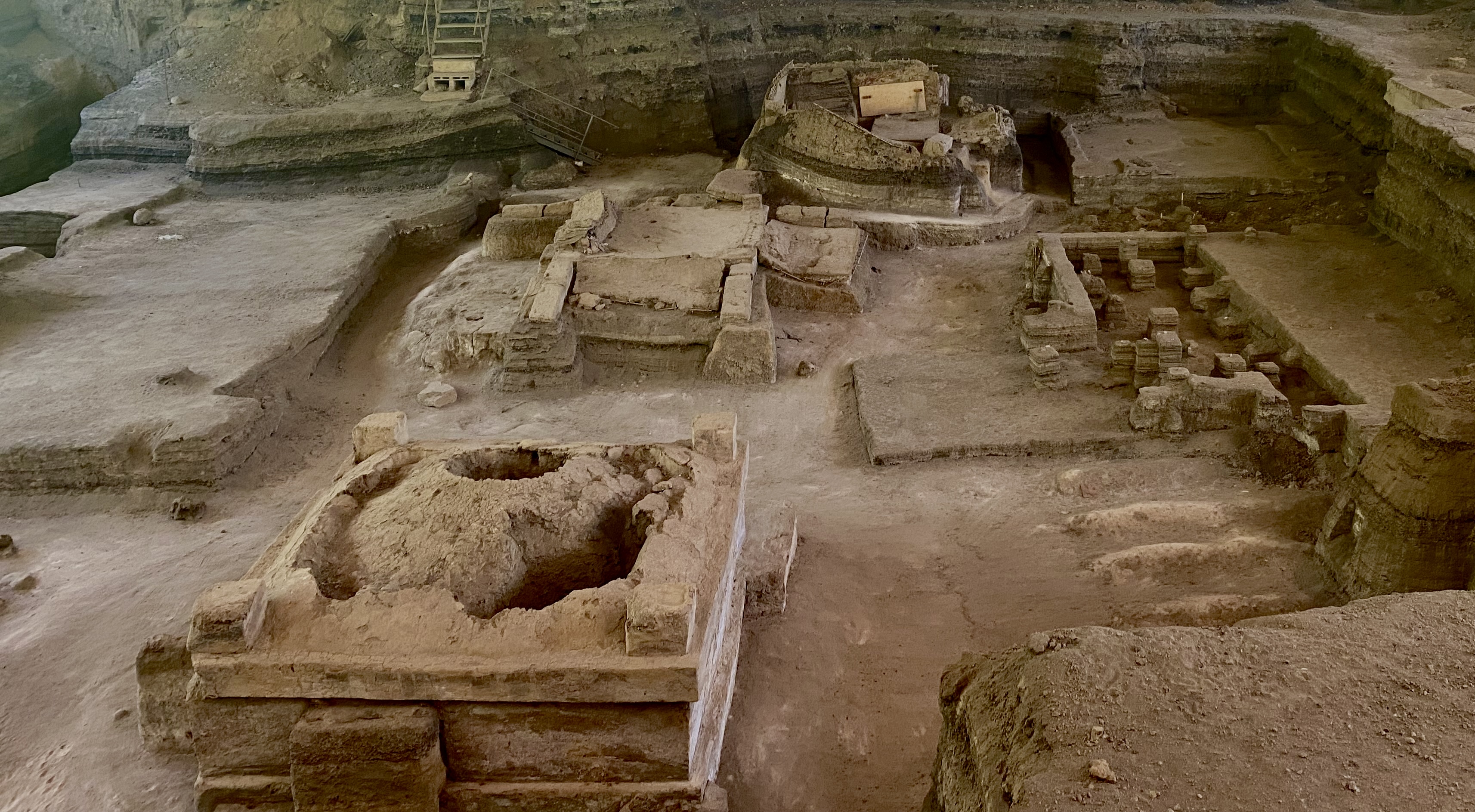
We can only guess as to whether the people at Joya de Ceren were able to read any warnings from the volcano and able to leave before catastrophe struck, but our visit was a timely reminder that humans have long displayed resilience and adaptability in the face of a changing environment. Today we are blessed to be in a position to use science to generate more advanced and accurate warnings to help save as many lives as possible. Doing so, however, requires continued investment in the scientists and institutes performing this work. After all, you never know when or where disaster might strike next.