“It’s beautiful. But also a bit sad too. Just imagine what it would’ve looked like 30-40 years ago.”
Our second-ever dive took place on the western edge of Utila Bay along the Black Coral Wall, where we swam for half an hour along a solid vertical shelf of coral towering next to us, sometimes reaching as many as ten meters in height. Being novices, the sheer scale and diversity of the coral structures was impressive; it’s one thing to know that an entire world exists just below the surface of the ocean but it’s something totally different to witness it.
However, even us scuba babies could tell that the reef was not doing great, hence the words Vrinda relayed to me after we returned to the boat. Many of the corals looked totally devoid of color. Fish would occasionally wander by, but by and large we didn’t see a ton of other wildlife. (We can now say that the place does get a bit more lively at night though!) While we didn’t expect National Geographic-level activity, it was clear that the area had seen better days. Coral reefs are one of the most biodiverse places in our ocean and our planet. Their health is vital not only to the plethora of creatures living there but to planetary health as a whole, as they act as a carbon sink, food source, wave breaker, and natural medicinal laboratory all rolled into one (NOAA, 2024). But our actions are devastating these beautiful and crucial places.
Modern corals have been around since the time of the dinosaurs (and ancient corals since before life moved onto land!), and have survived multiple mass extinction events in that time (Stanley, 2001). Their resilience speaks both to the spread and diversity of corals around the globe over the preceding millions of years, as well as the success of the symbiosis that coral polyps have developed with zooxanthellae algae. Coral structures - often made up of thousands of individual polyps - provide safe harbor and carbon dioxide for the algae, which in turn provide nutrients for the coral via photosynthesis and often give the corals spectacular color (Red Sea Creatures, 2026). This partnership is remarkably efficient, with as much as 90% of the coral’s energy coming from the algae (NOAA, 2024). The structures we see as divers are actually the calcium carbonate exoskeleton designed to protect the softer polyps (and their symbionts). Over time, the polyps reproduce asexually and grow the colony, eventually building the massive reefs we see today.
While corals as a system are remarkably resilient, each individual is actually very sensitive to environmental conditions. Factors such as water temperature, nutrients, and the presence of fish combine to create a delicate balance where reefs can thrive. As we humans have historically been largely ignorant of the impact our species has on other ecosystems, it should come as no surprise that coral reefs have been in decline for as long as we have records of them - and probably for some time before (Pandolfi, 2003). Even as far back as several centuries ago, overfishing almost certainly caused disruption to environments unfortunate enough to be located near human settlements. More recently, increases in ocean temperature and pollutants have led to even more widespread destruction of these fragile ecosystems.
The corals that we saw that lacked most, if not all, of their color had undergone a process known as bleaching, in which the algae are expelled in response to stressful conditions (Australian Institute of Marine Science (AIMS), 2025). The most common stressor to these animals is marine heatwaves, as even deviations of a single degree (Celsius) above average can lead to bleached reefs. Given that the global average now exceeds this mark, it is not a surprise that we are quickly seeing the demise of these once vast ecosystems (Zeng, 2025).
“Great Barrier Reef Suffers Worst Coral Decline on Record,” read one headline from last year (BBC, 2025). If that statement generates a sense of déjà vu, just know that it’s not you going crazy, it’s the planet. Over the past thirty years, NOAA and ICRI (International Coral Reef Initiative) have recorded four separate mass bleaching events, each more expansive than the last, with the latest impacting nearly 85% of the world’s corals worldwide (NOAA, 2025; Reef Resilience Network, 2025). These planetary catastrophes are extremely new to the corals - coral core records go back hundreds of years and indicate no similar events occurred before the 80’s - but they are now happening with alarming regularity (Zinke, 2014; AIMS, 2025).
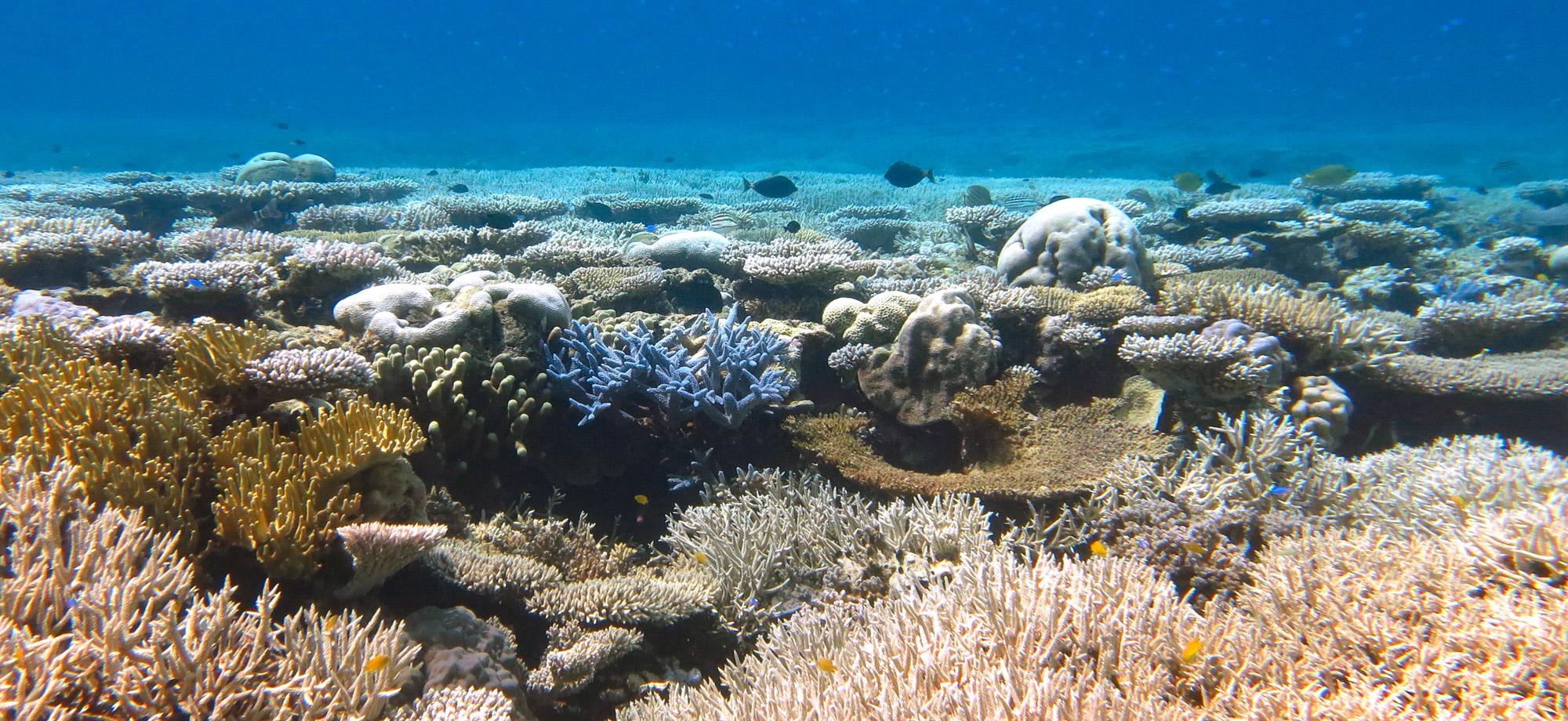
In addition to their beauty, the massive reef structures built by the corals are a vital part of the marine ecosystem; despite the fact that they cover only 1% of the world’s oceans, they provide habitat to around 25% of marine life (NOAA, 2025), with many species endemic to specific reefs. Because the corals literally create the framework for these ecosystems, any damage not only affects the polyps but also most of the living things that make their home there. The loss of these environments represents a devastating blow to oceanic biodiversity. They also cripple the fishing and tourism industries that depend on that very wildlife to thrive. Without rapid intervention, entire reef ecosystems could soon collapse, an incalculable loss for our planet (Earth.org, 2025).
Despite the bleak picture painted so far, there are a couple of factors working in coral’s favor. Corals can bounce back from bleaching: in fact - if environmental conditions are stable - most would expect to recover their algae and color following the abatement of the relevant stressor. To truly kill a reef, bleaching needs to occur over an extended period of time, often over several years. Of course, this may happen if climate change continues to warm our oceans, which is why it is so important for us to limit the extent of warming as quickly as possible. Additionally, while the fate of the majority of corals may be in peril, it is worth remembering that this is an entire class of animals, with different geographies, symbionts, living conditions, and resilience (Roff, 2021). We can hope that some will survive - and maybe even thrive - even as we change the environment around them. Finally, awareness of the plight of corals has led to a plethora of conservation efforts in recent years whose scope are truly remarkable (UNEP, 2020). From government programs designed to limit other coral stressors like pollutants and excessive tourism to diving centers offering specialty courses to complete reef restoration and conservation (on a personal note: V and I are already planning to make this a part of our next dive trip), citizens around the world are teaming up to protect this treasured and invaluable resource for future generations.
Writing this piece was tough. As a science communicator, it is difficult to balance displaying the facts (oftentimes dire) and capturing attention while still leaving the audience with hope for the future and actionable steps they might take to improve the situation. With a problem as large as those facing our reefs, it is only too easy to feel powerless in the face of an onslaught of negative coverage (Eagle, 2018). Survival of many of the world’s reefs really will depend on our ability to limit greenhouse gas consumption and therefore rising ocean temperatures. While this can seem like a problem with unlimited scope, it also means that everyone can do their part to help reefs simply by continuing to act in the best interest of the planet by limiting consumption, reusing materials, and supporting businesses and politicians that make the Earth a top priority.
If you don’t want to take my word for it, consider these from Jason Momoa, who recently implored readers of The Guardian to “live in the spirit of kuleana, take responsibility, and treat them [reefs] like we treat ourselves and our children. Because they are a part of us, and hopefully always will be.”