A bucket list item achieved.
With our time in the C-4 countries (Guatemala, El Salvador, Honduras, and Nicaragua) quickly coming to an end as we approached our 90-day visa, we weren’t sure if taking a 2 week detour into Honduras for scuba diving certification was worth it or not, as that would cut our time in Nicaragua in half. In the end - with some convincing from our campervan friends - we took the plunge (pun intended) and soon our initial plan of only 4 days of scuba diving quickly turned into a full week as we fell in love with the tranquility and awe of life underwater.
If you were to look at a map, you would see that we made quite the trek to get to go diving in the first place. We started on the Pacific Coast of El Salvador/Honduras, drove all the way up to the Caribbean coast, and took a one hour ferry just to get to the island of Utila; an island known for being backpacker-friendly with very affordable certification options. This island is so tiny that bringing a campervan over would not have been feasible as the roads are not big enough to drive on. Legend has it that the one time that a campervan did appear on the island, the mayor and the chief of police were divided as to whether it could stay, with the mayor inviting the campervan to personally stay on his property to settle the dispute. So for this one week, the three of us stayed at a backpacker hostel that provided accommodation to accompany the scuba certification.
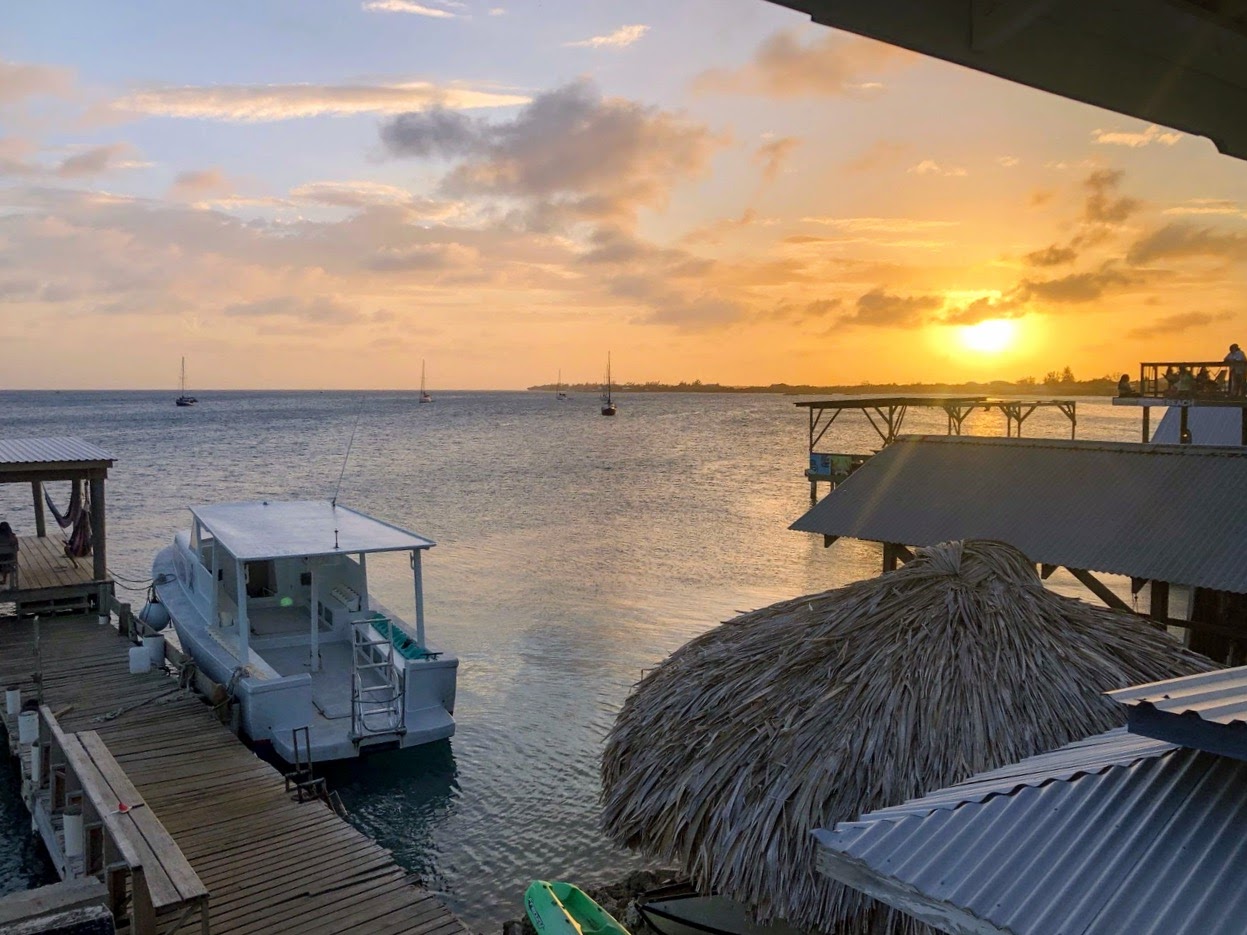
Our first day there, we were discouraged and disheartened and absolutely were not sure how we were going to last the week. Here’s why: (1) the hostel kitchen was absolutely disgusting, like flies in the fridge disgusting, (2) we were in a shared dorm with Arya and sleeping on the top bunks which wasn’t ideal for her, (3) Arya was barking at newcomers at dusk time. I realize how old we sound saying that being in a shared dorm room was not great but, to be fair, we have been living in our own space this entire time and we had originally been told we were going to have a private room because of the dog. Luckily, the next day we were able to move into a very nice private room that had AC (which we actually didn’t use) and a private bathroom. This change improved things so much. For one, we could get comfortable and spread out, and Arya had a space that was hers, and that helped her to calm down so much. The kitchen never improved until 5 days later, but we managed it the best we could as the affordable vegetarian options for eating out were not very plentiful.
We worked with Arya on our first full day there as we did our course readings and quizzes. We practiced leaving her in the room without going barking mad. We practiced being calm when other people entered the hostel. We introduced her to as many guests as were comfortable meeting her (thankfully this was most of them). She very quickly got the hang of it all.
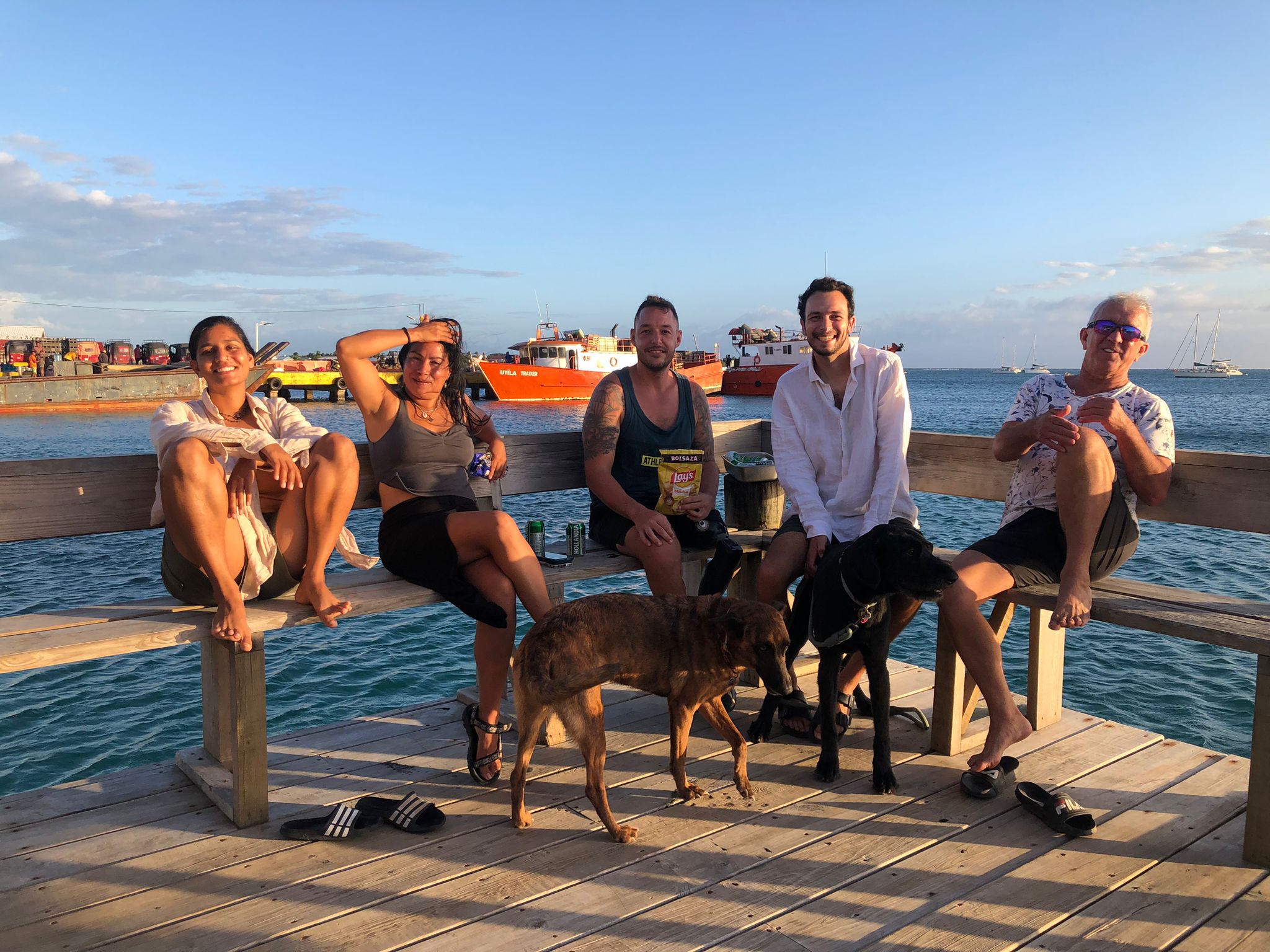
We even benefitted from having made friends the previous night with N (from Texas!) who had shared the original dorm with us. Not only did she help us get the lay of the land around the dorms, but she also unwittingly became our backup dog sitter! Just the next day, as we were going through safety and gear with the instructor, we looked up the dock and saw a very familiar looking black dog trotting and goofily looking around for her humans. Quick on her feet, N jumped up and grabbed Arya to put her back in the room so that we could continue learning. (It turned out our door only stays shut when it was locked, otherwise the wind could open it just enough for a curious dog to poke her nose through…) This was not the only time this happened, but between N and our vanlife friends \comment{add link to antigua post} who came across a day later, Arya was well taken care of and watched. She was so well-loved that one of our friends had been walking her every time we were out on the boat scuba diving. As we only found this out on the last day, Arya had been parlaying everyone’s worry about her being too cooped up in the room into three or more walks a day, that rascal! Arya was enjoying the hostel life, and we were too.
Scuba diving itself was an entirely different story. On our first day, we practiced safety and gear use right off the beach. And the first time we went under with all of our gear on, just 2 meters under the surface, we were both struggling.
Vrinda: I believed that scuba diving was not for me and that maybe I would just learn how to free dive (which I still will). I just could not stay on the floor of the ocean and I couldn’t figure out this breathing thing with gear and I kept coming up. I soon got the hang of it, and the rest of the training session went smoothly.
Clark: I struggled to get used to not breathing through my nose, and to keep breathing steady even during physical exertion or during mental stress. I had difficulty as we practiced taking our mask off (flooding your nose and eyes with water, but you need to just focus on breathing through the mouth) and taking the respirator out (opposite problem! This time, slow your breathing and wait to retrieve your respirator or get one from a friend. Make sure you have enough breath to exhale the water you invariably swallow when putting the respirator back in.)
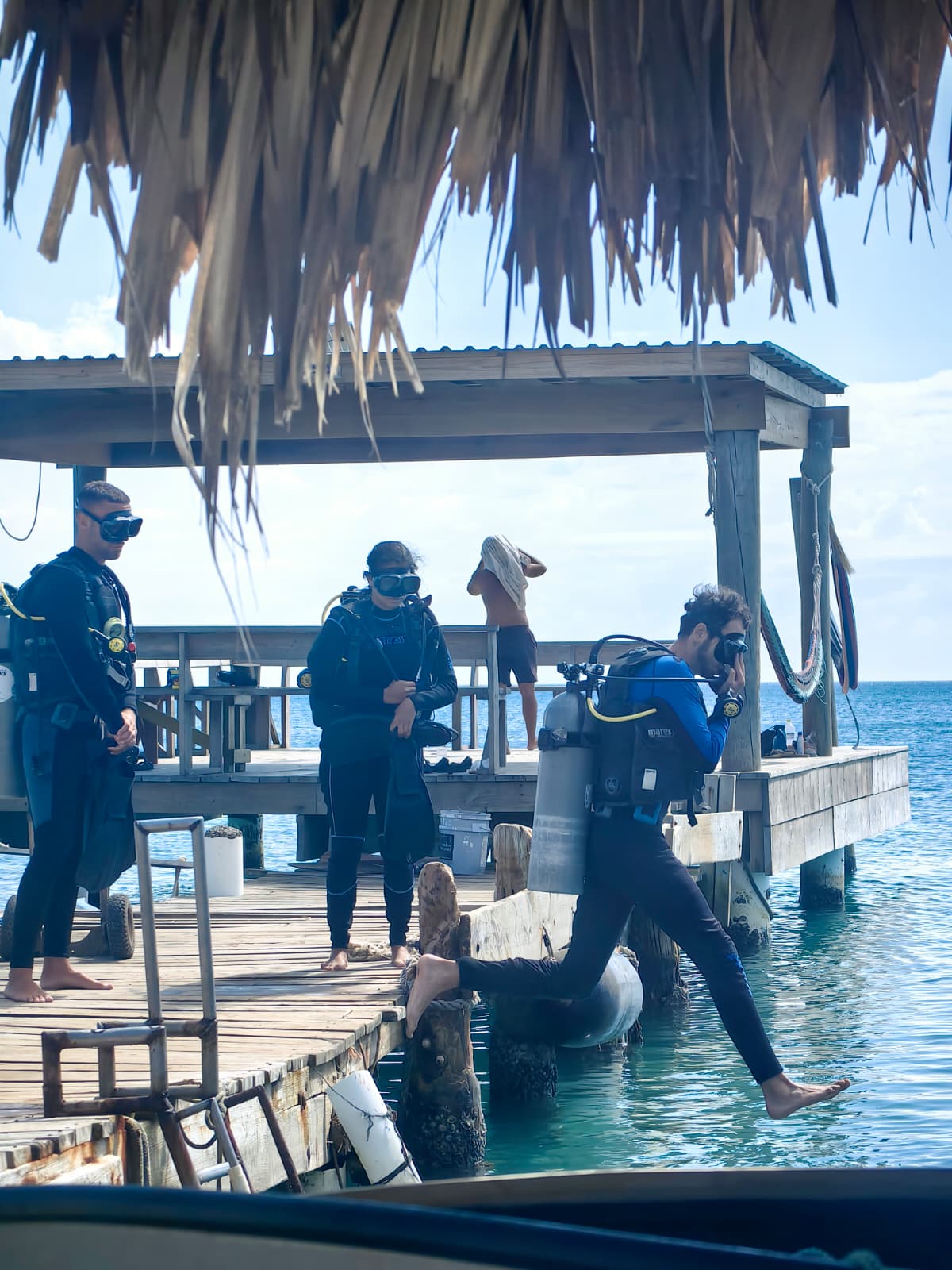
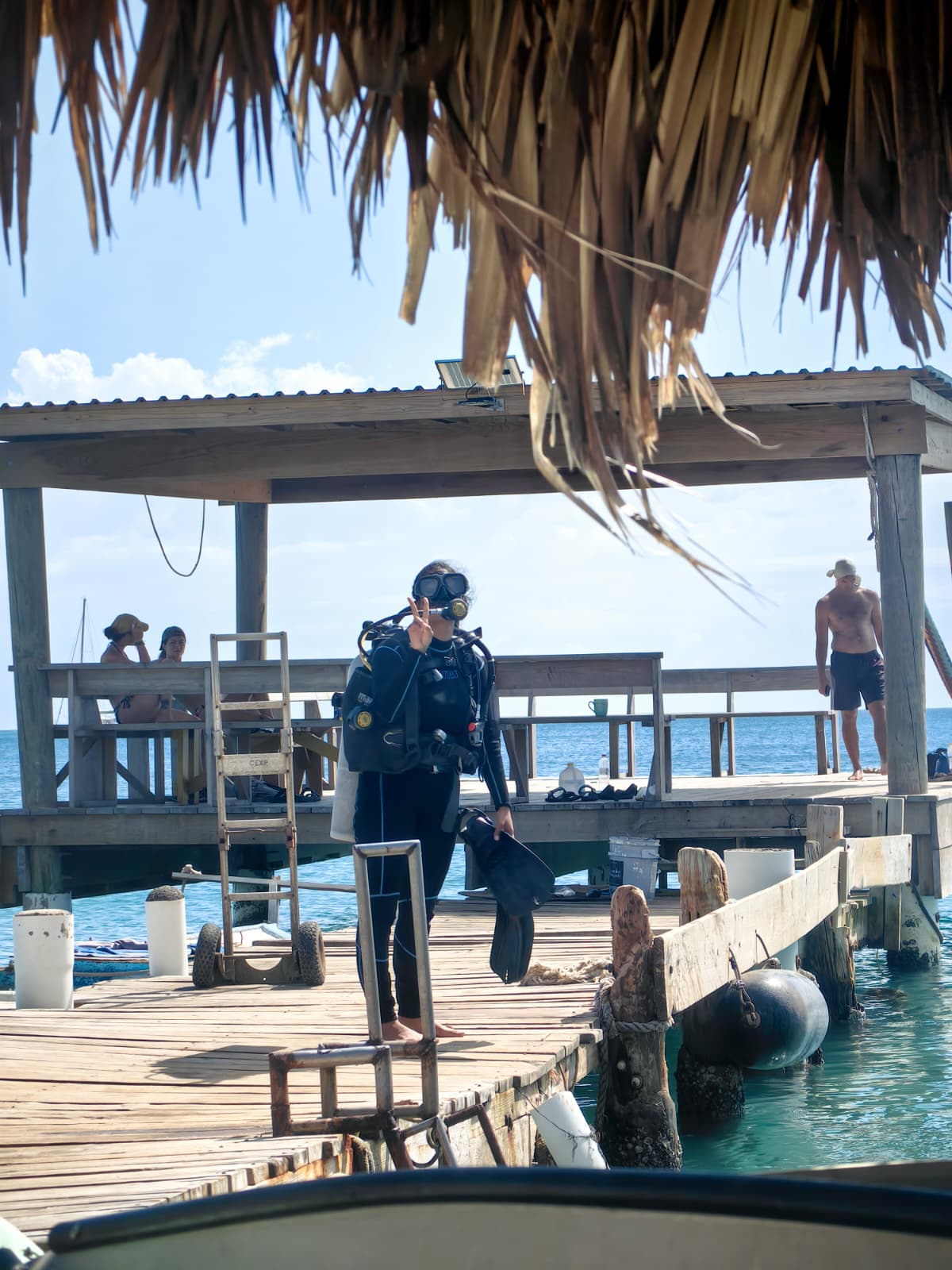
Ultimately we were grateful to have experienced these difficulties in shallow waters; that’s what practice is for. Now, we were ready to go to 12-18m, where the pressure differentials mean any mistakes are not quickly corrected. Boy was that something. We did four dives over the course of two days where we practiced swimming, running into issues like googles filling up with water or not having air, descending and ascending, and trying to maintain buoyancy so we are neither sinking nor floating up. It was quite a challenge when we had to navigate between the coral reef walls without touching the coral reef with our gear. We were very excited to practice our skills in this course, and we slowly became more comfortable navigating and breathing underwater.
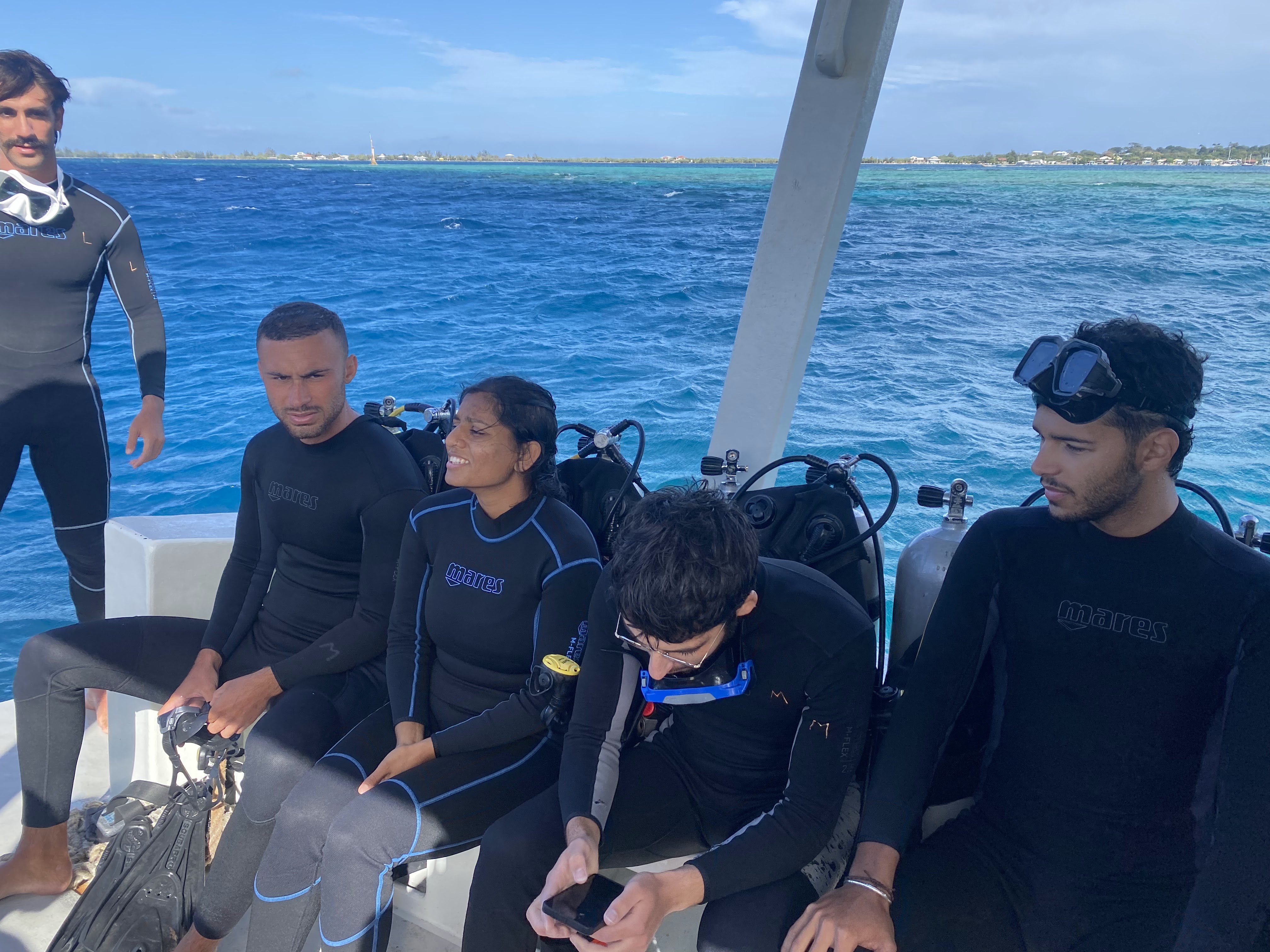
After having completed the Open Water course, and knowing how affordable we were doing this in Utila, we made the last-minute decision to extend our time on the island for a few more days and knock out the Advanced Open Water course as well. It is easily one of the best decisions we’ve made on this trip. No longer needing to focus on those pesky basics (even the instructors mentioned everyone hates mask skills), we could fully turn our attention to being present with every dive, taking in as much as we could in each 35-45 minute session.
This course allowed us to further define our navigation skills, go down to 30m, perfect bouyancy, explore a shipwreck, and go night diving. To achieve this and still make it to Nicaragua with enough time, we ended up doing four dives one day and three the next. This was insane and absolutely exhausting, but whoa. The shipwreck was awesome, seeing this massive manmade object transformed into a totally new ecosystem, with plenty of algae, fish, crustaceans, and more. We even got to see a huge snapper (easily over 100 pounds) that had been hiding in the masthead. This was also a time to perfect swimming with gear on and not running into the wreck itself. In our navigation dive, we took the lead, identifying a location on the coral wall where our boat was, swimming along and through the coral structures before returning before we ran out of air. All of these dives not only gave us new skills, but also new confidence in our scuba abilities.
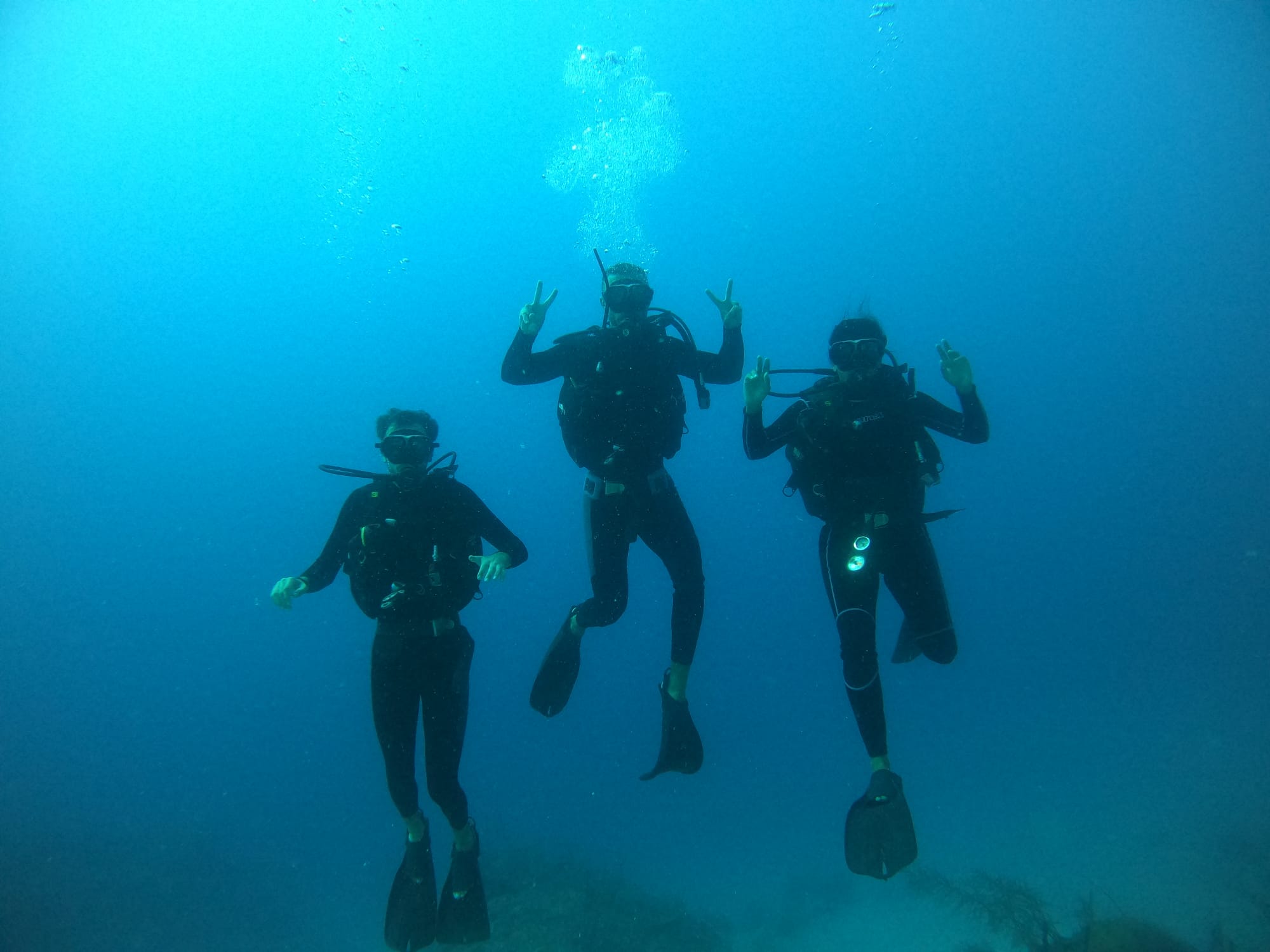
Our final dive began right as the sun was setting, our first time with limited visibility underwater. And at first it was hard; it’s already difficult enough to distinguish folks underwater, but when everyone can only shine a single light on each other, it was disorienting and easy to feel as though the group could lose you at any second! After adjusting, though, it easily became the highlight of our week. As we swam, the reef came alive, with so many animals active now that the sun had set. Within the first several minutes, we saw a couple of massive striped lobsters (over 3 feet long) and a lionfish. This was quickly followed by an eel, pufferfish, and humongous hermit crab (that Vrinda found!). It really was a different world, but we felt like we were still missing that final capstone: all any of us newbies could talk about on our ride out had been how much we wanted to see an octopus. And just when it seemed like this ultimate dream would not be realized, a member of our party urgently signaled to us to check out this rock formation. Even without being able to talk underwater, we could tell this was something special. Sure enough, as we floated over the rocks and looked into a crack, we could see a large eye looking back at us and an even bigger head hugging the coral as it tried to avoid our curious stares. Truly a dream come true.
Maybe the hardest part of the week was saying goodbye. Despite our initial reticence, we really did end up feeling right at home in the hostel, by the end of our stay, we had met nearly everyone there and soon we were dishing out advice and stories to newcomers just as N had done for us. Diving was extremely difficult at first, but after we got the hang of it, we were hooked: being underwater was one of the most tranquil, unique, and fascinating experiences we have ever had. This week has us eager for more dives, and - now that we’re certified - a certain Don Hickman is already thinking about future dives that we could do together.
Comments